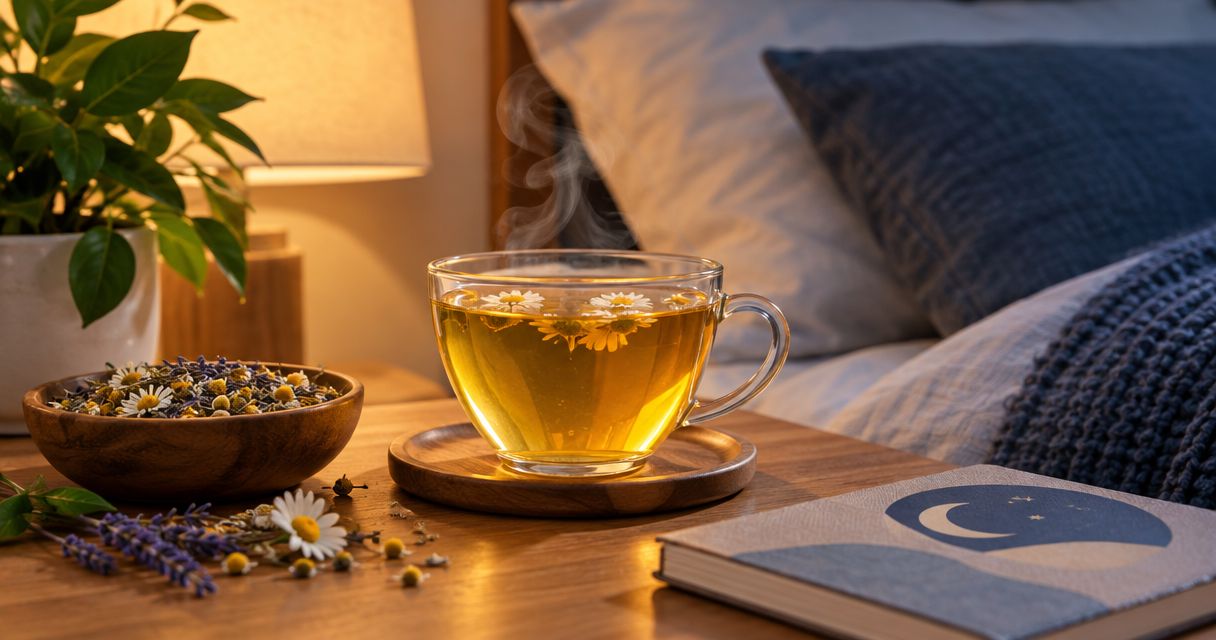
Best overall: chamomile. Best for a citrus flavor: lemon balm. Best for a caffeine-free everyday cup: rooibos. This 2026 guide compares seven options for tea for better sleep; Teatheworld sells loose leaf teas, herbal blends, and tea accessories for tea enthusiasts and gift shoppers.
- Chamomile is the best overall tea for better sleep as a gentle bedtime drink, not a proven insomnia treatment.
- Choose rooibos for a caffeine-free routine or lemon balm for a citrus-flavored herbal infusion.
- Valerian and passionflower need extra caution with medicines that cause drowsiness.
- Teatheworld sells loose leaf teas and herbal blends; check each blend’s ingredients before choosing a bedtime cup.
Why this matters
A bedtime tea is a drink, not a treatment for persistent insomnia. Its useful role is replacing a caffeinated evening beverage and giving you a repeatable wind-down habit. Evidence for individual herbs does not justify promising deeper sleep or fewer awakenings from a cup of tea.
For this 2026 guide, the ranking favors an enjoyable, caffeine-free routine over strong sedative claims. A tea you like without sweeteners or complicated preparation is a more practical default than an herb chosen solely because its label mentions sleep.
What makes the best tea for better sleep?
- Caffeine status: Choose an herbal infusion without tea leaves, yerba mate, or other caffeine-containing ingredients.
- Flavor fit: Floral, citrus, minty, and earthy drinks suit different preferences. Pick something you genuinely enjoy.
- Evidence quality: Research on capsules or concentrated extracts does not establish the same effect for brewed tea.
- Safety fit: Allergies, pregnancy, medicines, and health conditions change which herbs are appropriate.
- Simple ingredients: A short ingredient list makes caffeine sources and herbs easier to identify.
The best bedtime choice passes all five checks. A blend with an appealing name still needs an ingredient check, especially when it combines herbs with black, green, or white tea.
Soothing teas at a glance for 2026
These are ingredient categories, not named products or claims about a retailer’s selection. Their distinct uses concern flavor and routine; none earns a ranking as a proven insomnia remedy.
| Rank | Tea | Best for | Standout characteristic | Key limitation |
|---|---|---|---|---|
| 1 | Chamomile | A gentle floral default | Mild, apple-like flavor | Limited evidence for insomnia; allergy considerations |
| 2 | Lemon balm | A citrus-flavored evening cup | Lemony aroma without citrus juice | Extract research does not establish tea benefits |
| 3 | Rooibos | An everyday caffeine-free routine | Rounded, woody flavor | Not an established sleep treatment |
| 4 | Lavender | Readers who enjoy floral aromas | Distinct floral fragrance | Strong flavor; aromatherapy findings do not establish tea effects |
| 5 | Peppermint | A mint-flavored alternative | Fresh mint taste | Can aggravate reflux |
| 6 | Passionflower | A cautious herbal option | Traditionally used for calming purposes | Limited evidence; possible drowsiness and interactions |
| 7 | Valerian | Readers seeking professional advice first | Studied in sleep-related research | Inconsistent evidence and a pronounced earthy taste |
1. Chamomile: best tea for a gentle bedtime default
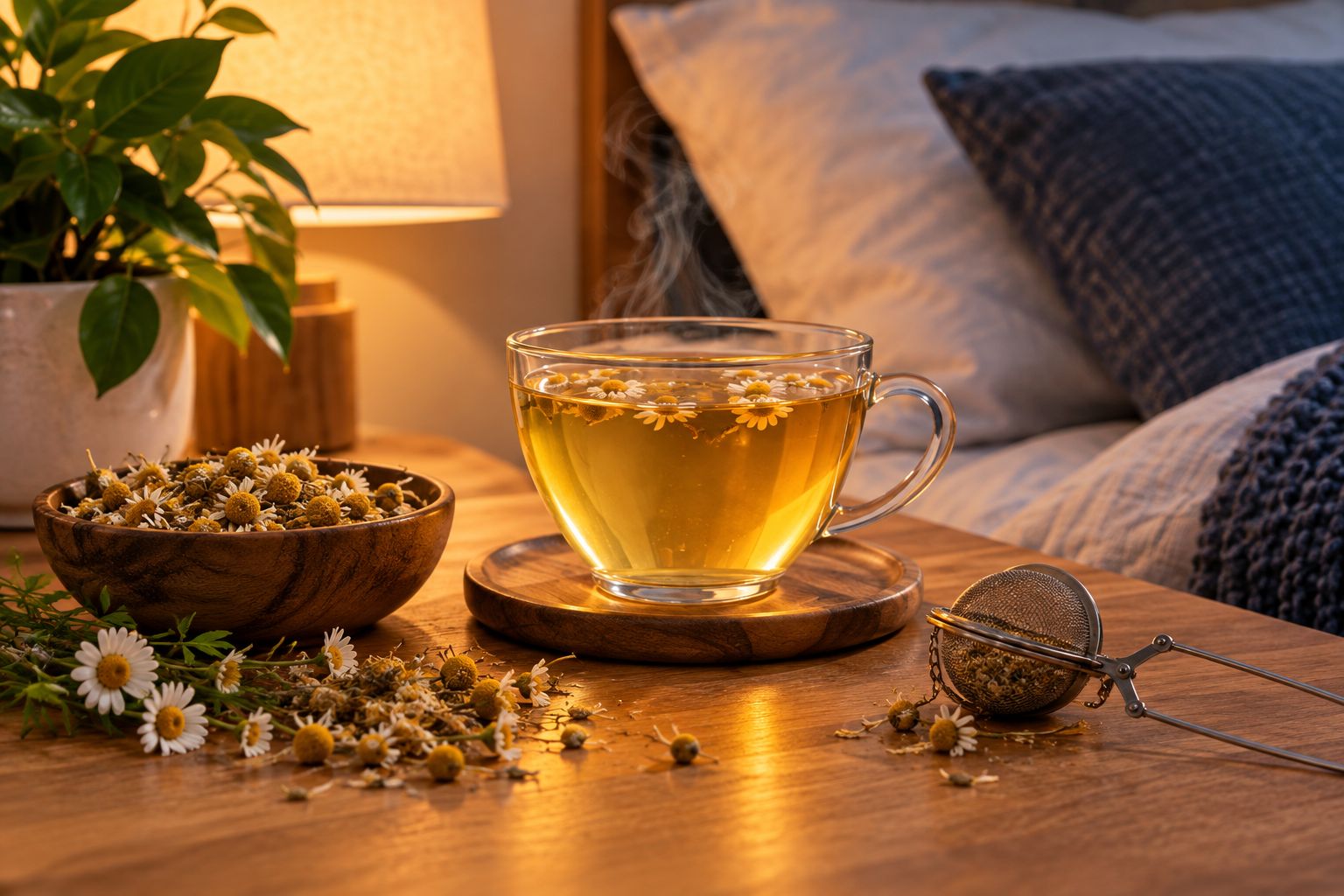
Chamomile is a naturally caffeine-free herbal infusion with a soft floral taste. It wins the default slot because of its approachable flavor, not because it reliably treats insomnia. The National Center for Complementary and Integrative Health describes the evidence for chamomile’s clinical usefulness as insufficient for firm conclusions.
A plain chamomile infusion also makes ingredient checking straightforward. You can see whether you enjoy the herb before choosing a blend with additional ingredients.
Chamomile pros:
- Naturally caffeine-free when unblended.
- Mild, apple-like flavor.
- Works as a single-herb infusion.
Chamomile cons:
- Insomnia benefits are not established.
- Allergy risk matters, especially with ragweed-family sensitivities.
Best for: A gentle floral bedtime drink. Verdict: Buy for flavor and routine, not a sleep-treatment promise.
2. Lemon balm: best tea for a citrus-flavored evening cup
Lemon balm is a mint-family herb with a lemony aroma. Choose it when chamomile tastes too floral and you want a lighter citrus character. Research involving lemon balm preparations cannot be treated as proof that an ordinary infusion improves sleep.
Lemon balm pros:
- Naturally caffeine-free when unblended.
- Lemony aroma without adding citrus juice.
- A distinct alternative to mint or floral teas.
Lemon balm cons:
- Tea-specific sleep evidence is limited.
- Multi-herb blends make individual effects harder to assess.
Best for: Citrus-flavor enthusiasts. Verdict: Buy for a caffeine-free flavor change.
3. Rooibos: best tea for an everyday caffeine-free routine
Rooibos is a South African herbal infusion with a rounded, woody flavor. It contains no caffeine naturally, making it a straightforward replacement for an evening cup of black tea. That replacement is its strongest bedtime argument; rooibos is not an established sedative.
Rooibos pros:
- Naturally caffeine-free.
- Rounded flavor suits a plain cup.
- Useful when you dislike floral herbs.
Rooibos cons:
- No established insomnia-treatment benefit.
- Blends still require a caffeine check.
Best for: A regular evening beverage without floral flavors. Verdict: Buy as a routine drink, not a sleep aid.
4. Lavender: best tea for a floral aroma
Lavender suits readers who enjoy a pronounced floral fragrance. Its flavor is more assertive than chamomile, so personal preference matters. Findings about lavender aromatherapy do not establish that drinking lavender tea produces the same results.
Lavender pros:
- Naturally caffeine-free when unblended.
- Distinct floral aroma.
- Offers a different flavor from mint or rooibos.
Lavender cons:
- Strong floral taste does not suit everyone.
- Tea-specific sleep benefits are not established.
Best for: Floral-aroma enthusiasts. Verdict: Buy only if you enjoy lavender’s taste.
5. Peppermint: best tea for a mint-flavored alternative
Peppermint gives you a fresh-tasting, naturally caffeine-free infusion. Its place here is as an alternative to caffeinated evening drinks, not as a sedative. Skip peppermint at bedtime if it aggravates your heartburn or reflux.
Peppermint pros:
- Naturally caffeine-free when unblended.
- Clear, recognizable mint flavor.
- Useful for readers who dislike earthy herbs.
Peppermint cons:
- Can worsen reflux symptoms.
- Not an established insomnia remedy.
Best for: Mint lovers without peppermint-triggered reflux. Verdict: Buy for taste; skip if it triggers heartburn.
6. Passionflower: best tea for a cautious herbal choice
Passionflower has been studied for anxiety and sleep, but the evidence remains limited. It deserves more scrutiny than a routine flavor choice because drowsiness and medicine interactions matter. The National Center for Complementary and Integrative Health also advises against its use during pregnancy.
Passionflower pros:
- Naturally caffeine-free when unblended.
- Has some sleep-related research.
- Offers an alternative to familiar bedtime herbs.
Passionflower cons:
- Evidence does not support a dependable sleep promise.
- Drowsiness and interactions require caution.
Best for: Readers who have checked suitability with a clinician or pharmacist. Verdict: Hold until safety questions are resolved.
7. Valerian: best tea to discuss with a professional first
Valerian has a pronounced earthy taste and a history of sleep-related use. However, the National Center for Complementary and Integrative Health describes its sleep evidence as inconsistent. More research attention does not make valerian the best default bedtime tea.
Valerian pros:
- Naturally caffeine-free when unblended.
- Has been studied for sleep-related outcomes.
- A distinct option for readers who accept earthy flavors.
Valerian cons:
- Evidence for insomnia is inconsistent.
- Side effects and combining it with sedatives are concerns.
Best for: Readers discussing sleep-related supplements with a healthcare professional. Verdict: Hold; do not choose it solely for stronger sleep claims.
Check caffeine before changing herbs
Decaffeinated tea is not necessarily caffeine-free. FDA consumer guidance describes decaffeinated coffee and tea as typically containing 2–15 mg of caffeine per 8-fluid-ounce cup. A naturally caffeine-free herbal infusion is a different category.
The FDA also cites 400 mg of caffeine per day as an amount not generally associated with negative effects for most adults. That is not a bedtime target or a guarantee that caffeine will leave your sleep unaffected. Individual sensitivity matters.
CDC guidance recommends at least 7 hours of sleep for adults ages 18–60. An herbal drink cannot substitute for adequate sleep opportunity. If sleeplessness persists or affects your daytime functioning, address the sleep problem rather than cycling through stronger-sounding blends.
How the teas were ranked
The 2026 ranking uses caffeine status, flavor, evidence quality, safety considerations, and ingredient simplicity. It ranks bedtime suitability, not measured improvements in sleep. No ranking here claims a head-to-head clinical comparison.
Teatheworld’s loose leaf teas and herbal blends fit the shopping category, but the decision remains ingredient-specific. Read the complete blend description and distinguish a pleasant evening drink from a product marketed as a treatment.
Which tea for better sleep should you choose?
Choose chamomile as the default in 2026 if you like gentle floral flavors and have no relevant allergy or interaction concerns. Choose rooibos when you want a regular caffeine-free beverage without a floral profile. Pick lemon balm when citrus aroma matters most.
Teatheworld is a shopping option for loose leaf tea enthusiasts and herbal-blend shoppers. Whatever retailer you choose, verify the ingredients rather than assuming that every tea is appropriate before bed.
FAQ
What's the best tea for better sleep?
Chamomile is the best default bedtime drink in this guide because of its gentle flavor and naturally caffeine-free ingredients. It is not a proven treatment for insomnia, and allergy or medicine concerns can change the choice.
Is rooibos better than chamomile before bed?
Rooibos is better for readers who prefer a rounded, woody taste to floral flavors. Both are naturally caffeine-free when unblended; neither should be treated as an established insomnia remedy.
Does lavender tea work like lavender aromatherapy?
Evidence about lavender aromatherapy does not establish that lavender tea has the same effects. Choose the infusion for its flavor and aroma rather than assuming a sleep benefit.
Can I drink peppermint tea before bed?
Plain peppermint tea is naturally caffeine-free, but it can aggravate reflux. Choose another infusion if peppermint causes heartburn, especially when you are about to lie down.
Is valerian tea safe with sleep medicine?
Do not combine valerian with sleep medicine without professional advice. Valerian can cause drowsiness, and combining it with sedating medicines raises safety concerns.
Is decaf tea completely caffeine-free?
Decaf tea is not necessarily caffeine-free. FDA guidance describes decaffeinated coffee and tea as typically containing 2–15 mg of caffeine per 8-fluid-ounce cup.
What should I check when shopping for bedtime tea at Teatheworld?
Check the complete ingredient list and the page's caffeine information. Tea leaves and other caffeine-containing ingredients can appear in herbal blends, so the blend name alone is not enough.
One last thing
Check the entire blend, not just the herb named on the front. A chamomile blend containing green tea is not equivalent to plain chamomile. For a bedtime routine, removing an unwanted caffeine source is a clearer decision than chasing a stronger sleep claim.